


The Future of Software: A Digital World Transformed by Artificial Intelligence
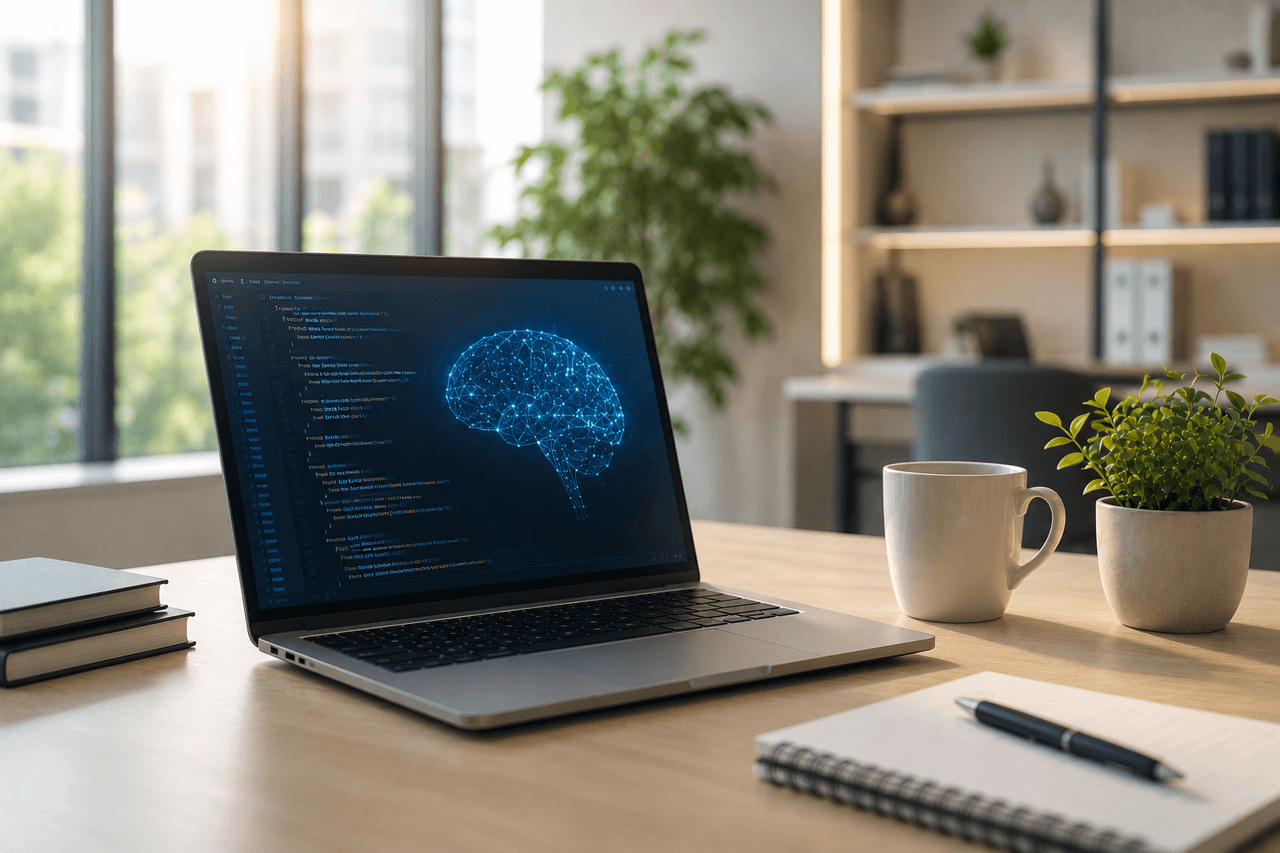


The Transformation of Software in the Age of Artificial Intelligence
Throughout the history of technology, every major transformation has fundamentally changed the way people work, production processes, and daily life. From the steam engine to electricity, and from the internet to mobile technologies, each innovation has marked the beginning of a new era. Today, artificial intelligence (AI) stands at the center of this transformation.
Artificial intelligence is reshaping not only the technology industry but also the future of sectors such as healthcare, finance, education, manufacturing, logistics, retail, and public services. For artificial intelligence to function, learn, and deliver value to people, it requires powerful, reliable, and scalable software systems. As a result, software development today is no longer just about writing code. Software serves as the fundamental infrastructure that enables artificial intelligence to think, learn, and make decisions.
The Evolution of Software
In the past, software was designed to operate according to predefined rules. A system could only execute the instructions explicitly written by a programmer. Whenever a new feature or functionality was required, developers had to modify the code manually. Software was not capable of learning or improving on its own.
With the rapid advancement of artificial intelligence, this approach has changed dramatically.
Today, many software applications do far more than simply execute predefined commands. By analyzing large volumes of data, they can learn from experience, identify patterns, and continuously improve the accuracy of their results over time. Thanks to technologies such as Machine Learning (ML) and Deep Learning (DL), software has evolved into dynamic systems that continuously adapt and improve.
For example, an e-commerce platform can analyze customers' purchasing behavior to predict which products they are likely to be interested in next. A navigation application can process the movements of millions of drivers to recommend the fastest and most efficient route. Similarly, a music streaming service can analyze listening habits to create personalized playlists tailored to each user.
The common factor among these examples is clear: software is no longer just a system that executes instructions—it has become a system that learns, adapts, and continuously evolves.
Changes in Software Development Processes with Artificial Intelligence
Artificial intelligence has not only changed the capabilities of software but has also fundamentally transformed the software development process itself.
Traditionally, software development followed a structured sequence of stages:
Requirements Analysis
Design
Coding
Testing
Deployment
Maintenance
Today, these traditional stages are supported by a wide range of advanced technologies.
Modern software development teams actively utilize:
AI-powered code completion tools
Automated bug detection and analysis systems
Intelligent test generation and execution
Code quality analysis tools
Continuous Integration (CI)
Continuous Deployment (CD)
Big data analytics
Cloud-based development environments
In particular, AI-powered development tools automate repetitive tasks, allowing developers to focus on more creative, complex, and strategic challenges. This not only accelerates the software development process but also improves software quality, enhances productivity, and reduces the likelihood of human error.
New Responsibilities in Software Development
In the age of artificial intelligence, the role of software developers has become more critical than ever before. In the past, being a skilled software developer primarily required a strong understanding of algorithms and programming languages. Today, however, the expectations have expanded far beyond these core technical skills.
Modern software developers are expected to have knowledge of:
Data analysis
Artificial intelligence algorithms
Cybersecurity
Cloud technologies
User Experience (UX)
Ethical principles
Data privacy
Sustainable software development
This is because every AI-powered system has the potential to directly impact people's lives.
Data: The Fuel of Artificial Intelligence
One of the most critical factors behind the success of artificial intelligence is the quality of the data it relies on.
No matter how advanced an AI model is, it cannot produce accurate or reliable results if it is trained on incomplete, inaccurate, or biased data.
For this reason, modern software systems place great importance on the following processes:
Data collection
Data cleaning
Data validation
Data security
Data storage
Data analysis
Thanks to cloud computing technologies, organizations can now securely store petabytes of data and analyze them within seconds. Software systems manage these massive data flows, ensuring that AI models receive high-quality information and can make accurate, efficient, and informed decisions.
Applications of AI-Powered Software
The impact of artificial intelligence is no longer limited to technology companies. Today, nearly every industry benefits from intelligent software solutions, improving efficiency, accuracy, and decision-making across a wide range of applications.
In the healthcare sector, AI-powered software is used in a wide range of applications, including:
Disease diagnosis
MRI and CT scan image analysis
Drug development
Patient monitoring systems
Surgical planning
Personalized treatment
Finance
The financial sector is one of the industries that has adopted artificial intelligence most extensively. With the help of AI-powered software, organizations can perform tasks such as:
Fraud detection
Credit risk analysis
Investment forecasting
Algorithmic trading
Customer behavior analysis
Automated customer service
These tasks can be completed within seconds, helping organizations reduce operational costs while improving customer satisfaction.
E-Commerce
AI-powered software used in e-commerce platforms provides businesses with significant advantages in areas such as:
Personalized product recommendations
Dynamic pricing
Inventory management
Sales forecasting
Customer segmentation
AI-powered chatbot support
Today, the success of many of the world's leading e-commerce companies is built on advanced software infrastructures.
Manufacturing and Industry
AI-powered software used in smart factories helps to:
Predict machine failures before they occur
Optimize production processes
Reduce energy consumption
Automate quality control
Manage robotic systems
As a result, production costs are reduced while operational efficiency increases significantly.
Education
AI-powered educational software can analyze students' learning pace and create personalized learning plans. These systems identify the areas where students need improvement, recommend appropriate learning materials, and make the learning process more efficient.
The Importance of Artificial Intelligence in Cybersecurity
As digital transformation accelerates, cyber threats have become increasingly sophisticated. Modern cybersecurity software is no longer limited to detecting known threats; through behavioral analysis, it can also identify previously unseen attacks.
AI-powered security systems can:
Analyze abnormal user behavior
Continuously monitor network traffic
Detect malicious software (malware)
Prevent phishing attacks
Automatically report security vulnerabilities
As a result, companies can prevent data losses worth millions of dollars.
Ethical and Trustworthy Artificial Intelligence
As artificial intelligence becomes more widespread, it also raises important ethical questions.
How does an AI system make decisions?
Is data stored securely?
Are AI algorithms unbiased?
Is user privacy protected?
The answers to these questions concern not only AI engineers but also software developers. Developing transparent, trustworthy, and accountable software will be one of the highest priorities in the future.
The Future of Software Development
In the coming years, software development processes are expected to become increasingly powered by artificial intelligence. Technologies such as natural language code generation, autonomous software development systems, intelligent testing platforms, and self-optimizing applications are expected to become more widespread.
At the same time, the human factor will remain essential. On the contrary, skills such as creativity, critical thinking, problem-solving, and ethical decision-making will become even more valuable. In the future, software developers will be more than professionals who write code; they will also serve as strategic experts who drive digital transformation.
Conclusion
In the age of artificial intelligence, software has become one of the most important drivers of technological transformation. Modern software is no longer limited to executing predefined commands; it has evolved into intelligent platforms capable of learning, analyzing data, making predictions, and supporting decision-making processes. Across industries such as healthcare, finance, education, and manufacturing, AI-powered software is improving efficiency, reducing costs, and enhancing the user experience. At the same time, issues such as ethics, security, and data privacy have become integral parts of software development.
Subscribe to Bayiloji
Don't miss updates, tips and special deals in the world of dealership.