


What Is an Accounting Voucher? Types of Accounting Vouchers
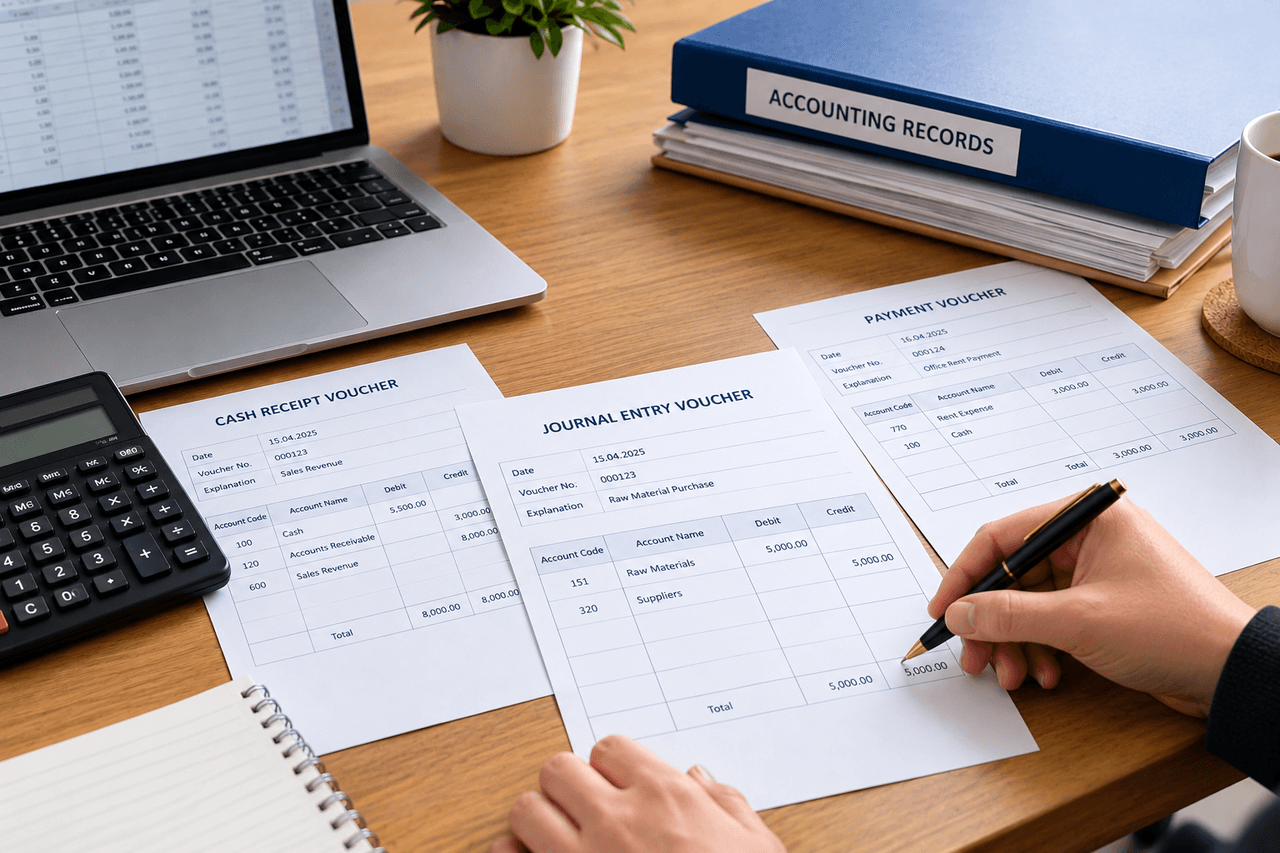


What Is an Accounting Voucher?
An accounting voucher is an accounting document used to document and classify the financial transactions carried out by businesses before they are entered into the accounting records. It is used to record a business's income, expenses, collections, payments, and other financial transactions. Accounting vouchers indicate which accounts should be debited and credited for each transaction. This helps ensure that accounting records are maintained in an organized, controlled, and traceable manner.
Why Are Accounting Vouchers Important for Businesses?
Accounting vouchers play an important role in helping businesses monitor their financial transactions systematically. By ensuring that a company's financial activities are recorded in a structured manner, they make it easier to analyze financial data. In addition, accounting vouchers help businesses review transactions from previous periods, monitor account movements, and prepare financial reports. Accurate and regularly maintained accounting records contribute to better-informed financial decision-making by business management.
What Is the Purpose of an Accounting Voucher?
Accounting vouchers enable businesses to systematically record their financial transactions. They help ensure that every financial transaction carried out within a business is associated with the correct accounts, thereby maintaining order and consistency in accounting records.
The main purposes of accounting vouchers are as follows:
Recording the income and expense transactions of a business.
Ensuring that financial transactions are posted to the correct accounting accounts.
Facilitating the control and auditing of accounting records.
Helping businesses monitor their financial position.
Supporting the accurate and systematic preparation of financial reports.
What Are the Types of Accounting Vouchers?
Accounting vouchers are divided into different types depending on the nature of the transactions carried out by businesses. The most commonly used types of vouchers in accounting practices are receipt vouchers, payment vouchers, and journal vouchers.
What Is a Collection Slip?
A cash receipt voucher is an accounting document prepared when cash enters a business's cash register during its operations. It ensures that cash payments received from customers, the collection of previously outstanding receivables, and other cash inflows are accurately and systematically recorded in the accounting records. This voucher documents the business's cash inflows and makes it easier to monitor financial transactions. Cash receipt vouchers play an especially important role in documenting cash collection transactions. While helping businesses monitor their daily cash movements, they also contribute to maintaining organized accounting records. A cash receipt voucher includes information such as the transaction date, the amount collected, the individual or organization making the payment, a description of the transaction, and the relevant accounting accounts. This makes it possible to clearly identify the source of each cash inflow.
What Is a Cash Payment Voucher?
A cash payment voucher is an accounting document prepared when cash leaves a business's cash register. This voucher, which ensures that cash payments made by the business are properly recorded, is important for monitoring cash outflows and maintaining organized accounting records. During their operations, businesses may make cash payments for various purposes, including employee payments, cash purchases of goods and services, rent payments, operating expenses, and other commercial transactions. Cash payment vouchers are used to record and account for these types of transactions. This ensures that the purpose of each payment, the recipient, and the amount paid are properly documented. When preparing a cash payment voucher, information such as the transaction date, payment amount, individual or organization receiving the payment, reason for payment, and relevant accounting accounts must be stated completely. In addition, depending on the nature of the payment, invoices, receipts, or other supporting documents should be linked to the accounting records. This helps make the business's financial transactions more transparent and auditable.
What Is a Journal Voucher?
A journal voucher is a type of accounting document used to record accounting transactions that do not involve cash inflows or outflows. Unlike cash receipt and cash payment vouchers, it is used to account for transactions that do not directly affect the cash account. Transfers between accounts, period-end adjustments, and various accounting transactions reflected in a business's financial records can be documented through journal vouchers. Business accounting processes involve more than just cash collection and payment transactions. Many other transactions must also be recorded, including transactions conducted through bank accounts, depreciation calculations, transfers between accounts payable and accounts receivable, and accrued expenses and revenues. Journal vouchers are used to ensure that these transactions are recorded accurately and systematically. When preparing a journal voucher, details such as the transaction date, transaction description, accounts to be debited and credited, and the relevant amounts must be clearly specified. Ensuring that the total debit and credit amounts are equal is one of the fundamental principles of the double-entry bookkeeping system. Therefore, accurately identifying the accounts and amounts included in a journal voucher is essential for maintaining consistency in accounting records.
How Is an Accounting Voucher Prepared?
When preparing an accounting voucher, the nature of the financial transaction must first be determined. After selecting the appropriate voucher type for the transaction, all relevant information must be entered into the voucher completely and accurately.
The accounting voucher preparation process generally involves the following steps:
Identifying the transaction: Determine the type and nature of the financial transaction carried out.
Selecting the voucher type: Choose a cash receipt, cash payment, or journal voucher according to the nature of the transaction.
Entering transaction details: Record the date, voucher number, description, and relevant document information.
Determining the accounts: Select the debit and credit accounts related to the transaction.
Recording the amounts: Allocate the transaction amounts to the relevant accounts.
Review and approval: Check that the total debit and credit amounts are equal, then transfer the voucher to the accounting records.
What Information Should an Accounting Voucher Include?
Accounting vouchers must contain certain information to ensure that they are prepared accurately and completely. This information makes it easier to review transactions later and link them to the relevant accounting records.
An accounting voucher generally includes the following information:
The business's name or legal title
The date the voucher was prepared
The voucher number
A description of the transaction
The codes and names of the relevant accounting accounts
Debit and credit amounts
Information about the supporting documents related to the transaction
Information about the individuals who prepared and reviewed the voucher, where necessary
What Is the Difference Between an Accounting Voucher and an Invoice?
An accounting voucher and an invoice are documents used in the financial processes of businesses, but they serve different purposes. An invoice is a commercial document that records the sale of goods or services and the amount charged for that transaction. An accounting voucher, on the other hand, indicates how a financial transaction should be recorded in the relevant accounting accounts. Therefore, while an invoice provides the commercial and financial basis for a transaction, an accounting voucher ensures that the transaction is transferred into the accounting records. An accounting voucher does not replace an invoice on its own.
What Should Be Considered When Preparing an Accounting Voucher?
Preparing accounting vouchers accurately is essential for ensuring the reliability of a business's financial records. Issues such as selecting the wrong account, entering incorrect amounts, or providing incomplete descriptions may lead to inconsistencies in accounting records.
Therefore, when preparing an accounting voucher:
The accuracy of the documents related to the transaction should be checked.
The voucher type appropriate to the nature of the transaction should be used.
Debit and credit accounts should be identified correctly.
The date and amount information on the voucher should be verified.
Transaction descriptions should be clear and sufficiently detailed.
Accounting records should be linked to the relevant supporting documents.
Conclusion
Accounting vouchers are important accounting documents that ensure financial transactions carried out by businesses are recorded accurately, systematically, and in an organized manner. Cash receipt, cash payment, and journal vouchers help associate different types of financial transactions with the appropriate accounts, ensuring organization and control throughout accounting processes. Properly preparing these vouchers enables businesses to monitor their income, expenses, cash movements, and other financial transactions more easily. To maintain reliable accounting records, businesses must select the correct voucher type, provide complete transaction details, and carefully verify debit and credit accounts. Furthermore, linking accounting vouchers to their supporting documents increases the auditability of financial transactions. Accordingly, the accurate and systematic use of accounting vouchers helps businesses manage their financial processes more effectively and prepare reliable financial reports based on accurate data.
Subscribe to Bayiloji
Don't miss updates, tips and special deals in the world of dealership.