


What Is an API? The Importance of API Integration for Businesses


What Is an API?
API stands for Application Programming Interface. In simple terms, it is an interface that allows two different software applications to communicate with each other according to predefined rules.
A simple real-life example is a restaurant. You place your order with the waiter, the waiter delivers it to the kitchen, and then brings your meal back to you. You do not need to know how the kitchen operates. Similarly, an API acts as a bridge between different software systems.
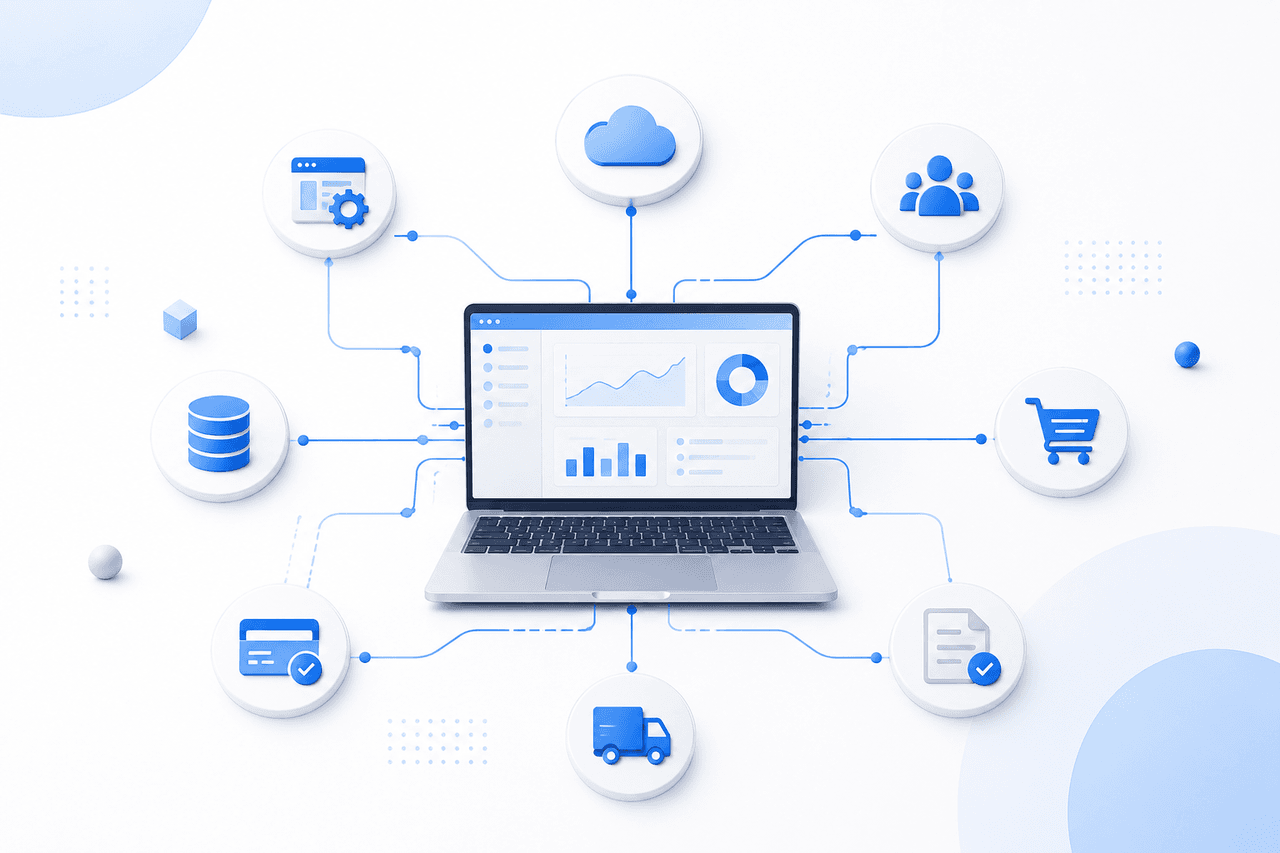
For example, when an order is placed on an e-commerce website, the API can automatically send the order information to the accounting, inventory, payment, and shipping systems at the same time.
How Does an API Work?
An API enables communication between a client and a server.
The basic process works as follows:
The application sends a request for data.
The API forwards the request to the appropriate server.
The server processes the request.
The result is returned to the application through the API.
Types of APIs
Open API: An API that is publicly available and can be used by anyone under specific guidelines.
Private API: An API that can only be accessed by internal employees or systems within an organization.
Partner API: An API designed for authorized business partners, distributors, or solution providers.
Composite API: An API that combines multiple requests into a single call, reducing processing time and improving efficiency.
The Importance of API Integration for Businesses
API integration allows different software systems to work together as a single ecosystem. For example, when a customer places an order, inventory is updated, an accounting record is created, an e-invoice is generated, and the shipping process begins automatically. All of these tasks can be completed without manual intervention, helping businesses save time and significantly reduce errors.
Benefits of API Integration
Reduces manual data entry.
Minimizes errors.
Speeds up business processes.
Enables real-time data sharing.
Improves the customer experience.
Makes it easier to integrate new software into existing systems.
API Use Cases
API technology is widely used across many industries.
ERP Systems: Managing finance, accounting, and inventory processes.
CRM Software: Keeping customer information up to date and accessible.
E-commerce: Automatically transferring product and order information.
Accounting Software: Automating e-invoice and e-archive processes.
Shipping Companies: Creating shipping labels and sharing tracking information.
Payment Systems: Managing secure payment and refund processes.
API Security
Since APIs transfer data between different systems, security is essential. To protect data and prevent unauthorized access, methods such as authentication, authorization, API keys, data encryption, and secure HTTPS connections are commonly used. Regular security testing and monitoring also help ensure system reliability and safety.
Best Practices for Using APIs
For a successful API integration:
Choose reliable service providers.
Review the API documentation carefully.
Follow data security standards.
Perform regular updates and maintenance.
Monitor system performance.
APIs and Artificial Intelligence
As artificial intelligence continues to evolve, APIs have become even more important. AI-powered solutions such as chatbots, automated reporting, sales forecasting, and recommendation systems can be easily integrated into existing software through API integrations.
Conclusion
API technology plays a vital role in enabling different software systems to communicate securely and efficiently. Through API integration, applications such as ERP, CRM, accounting, e-commerce, and payment systems can work together seamlessly. This allows businesses to automate data sharing, reduce manual tasks, and improve overall operational efficiency.
As digital transformation continues to accelerate, API integrations are becoming increasingly important. Well-planned and secure APIs help businesses adapt to new technologies, streamline operations, and deliver better services to their customers, making them an essential part of modern digital business.
Subscribe to Bayiloji
Don't miss updates, tips and special deals in the world of dealership.