


What Is an ERP System? Benefits for Businesses


What Is ERP?
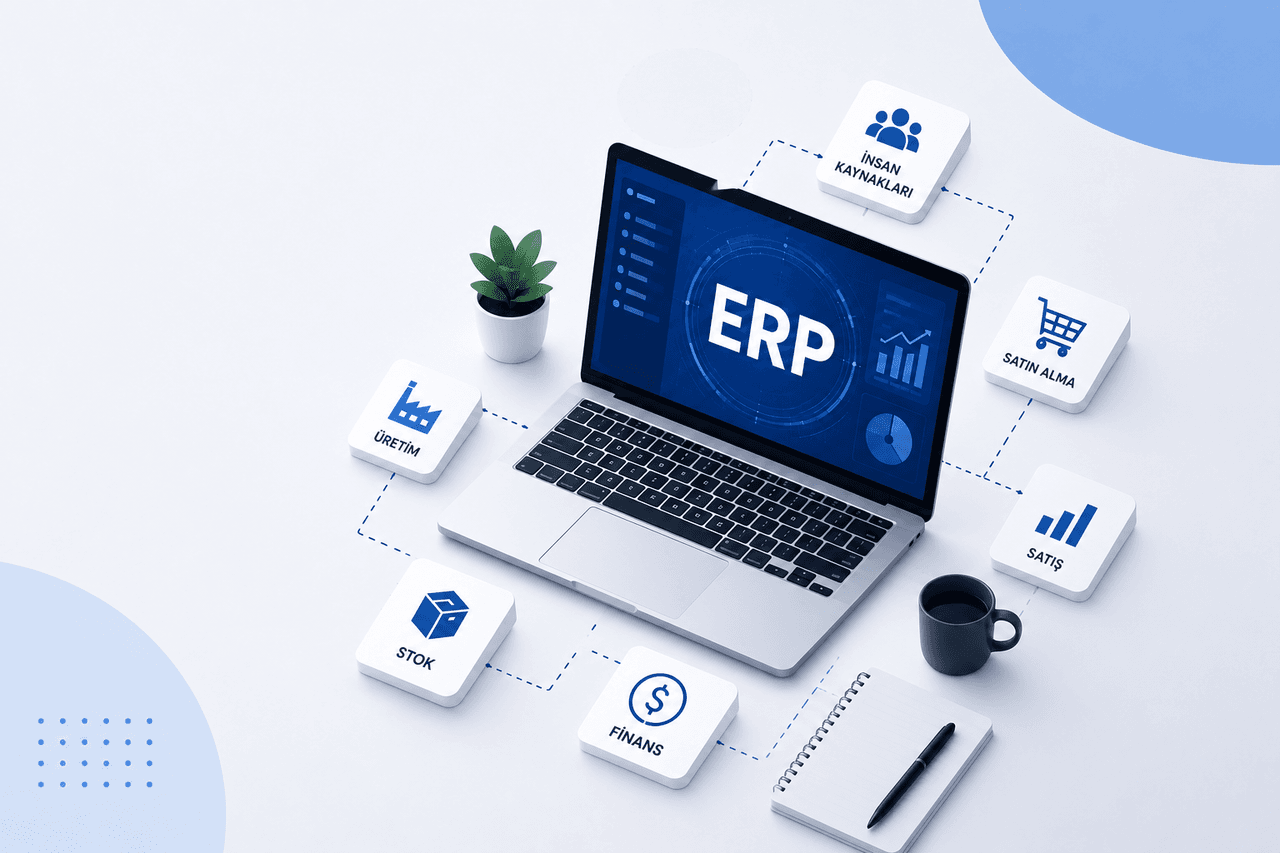
ERP (Enterprise Resource Planning), also known as Enterprise Resource Planning, is an integrated software solution that enables businesses to manage different departments through a single system. Many processes, such as accounting, finance, sales, purchasing, inventory, production, human resources, and customer management, are brought together in a common database through an ERP system.
As businesses grow, data inconsistencies can occur between independent software programs or Excel spreadsheets used by different departments. Entering the same information multiple times, working with outdated data, or a lack of communication between departments can lead to time loss and increased costs. ERP systems aim to eliminate these problems.
What Does ERP Do?
ERP systems plan, track, and report on a business's daily operations. This allows managers to view the current status of the business from a single screen.
The main functions of ERP systems include:
Managing sales processes
Tracking orders
Monitoring inventory movements
Tracking customer and supplier accounts
Monitoring income and expenses
Creating financial reports
Managing purchasing processes
Planning production
Managing employee processes
Automating business processes
Since all these operations are carried out through a single database, all departments work with the same information.
How Does an ERP System Work?
The basic principle behind ERP systems is a centralized database. For example, when a customer places an order:
The sales department records the order in the system.
The warehouse can instantly view the stock status of the ordered product.
The accounting department can create the invoice.
The finance department tracks the payment.
The manager can access sales reports instantly.
Since every department works with the same data, there is no need to enter the same information repeatedly. This structure both reduces the error rate and speeds up business processes.
What Are the Modules of an ERP System?
Each ERP software may offer different modules. However, the most common modules include:
Accounting and Finance: Income and expense tracking, current account management, banking transactions, cash movements, and financial reporting are carried out through this module.
Sales Management: Creating quotations, managing orders, sales invoices, customer information, and sales performance analysis are managed through this module.
Purchasing: Planning products to be purchased from suppliers, creating purchase orders, and tracking purchasing processes are handled through this module.
Inventory Management: Product entries and exits, warehouse movements, critical stock levels, and inventory information are monitored.
Warehouse Management: For businesses with multiple warehouses, this module manages the location of products, shipment planning, and inventory transfers.
Production Management: For manufacturing businesses, raw material usage, production planning, work orders, and cost calculations can be managed through this module.
Human Resources: Employee information, leave requests, attendance records, payroll, and performance processes are tracked.
CRM (Customer Relationship Management): Customer requests, communications, quotation processes, and sales opportunities are recorded and managed.
Advantages of Using an ERP System
Centralizes Data in One Place: Instead of using different Excel files or independent software programs, all information is stored in a single system. This reduces the risk of data loss and makes it easier to access up-to-date information.
Saves Time: There is no need for repeated data entry. Information entered by one department can also be used by other departments.
Reduces the Error Rate: Typing or calculation errors that may occur during manual processes are significantly reduced. Automated processes provide more reliable results.
Supports Better Decision-Making: ERP systems can generate real-time reports. Data such as sales performance, inventory status, cash flow, and profitability help managers make more informed decisions.
Strengthens Communication Between Departments: Since sales, accounting, finance, and warehouse teams work on the same system, the flow of information becomes faster. This helps reduce delays in business processes.
Helps Control Costs: Excess inventory, unnecessary purchases, and operational errors can be identified more easily. This contributes to reducing the overall costs of the business.
Who Is ERP Suitable For?
ERP is not a system used only by large companies. Today, thanks to cloud-based solutions, small and medium-sized businesses can also use ERP systems.
ERP systems offer significant advantages, especially for:
Wholesalers
Retail businesses
Manufacturing companies
E-commerce companies
Businesses in the service sector
Distribution companies
Businesses with multiple branches
What Is Cloud ERP?
Cloud ERP is an ERP system that operates over the internet. There is no need to install the software on the company's own servers, and the system can be accessed from anywhere with an internet connection.
The advantages of Cloud ERP include:
Remote access
Automatic updates
Lower maintenance costs
Easy data backup
High availability
Access from different devices
Cloud ERP provides significant convenience, especially for businesses that use a hybrid working model.
What Should Be Considered When Choosing an ERP System?
Choosing the right ERP software directly affects the efficiency gained from the system. The following criteria should be considered when making a selection:
Offering modules that meet the needs of the business
Having a user-friendly interface
Using a secure data infrastructure
Providing regular updates
Offering technical support services
Being able to integrate with official systems such as e-Invoice and e-Archive
Providing integration with banks, shipping companies, and e-commerce platforms
Being scalable
New needs may arise as a business grows. Therefore, it is important to choose an ERP solution that can adapt and evolve with the business.
Common Mistakes When Using ERP
To get the most out of an ERP system, it is important to avoid certain mistakes. The most common mistakes include:
Choosing software without conducting a needs analysis
Neglecting employee training
Transferring old data into the system without checking it
Trying to use the ERP incorrectly instead of adapting business processes to the ERP
Failing to regularly monitor reports
Successful ERP implementation is not achieved simply by installing the software. It also requires proper planning and the development of effective user habits.
Conclusion
ERP systems are comprehensive solutions that enable businesses to manage accounting, finance, sales, inventory, purchasing, and other core processes through a single platform. By centralizing data, automating processes, and enabling seamless information sharing between departments, businesses can improve operational efficiency and make more informed decisions.
Today, not only large companies but also small and medium-sized businesses can benefit from these advantages through cloud-based ERP solutions. Choosing an ERP system that is flexible, reliable, and suited to the needs of the business is an important step toward saving time, controlling costs, and supporting sustainable growth.
In today’s rapidly evolving digital landscape, ERP systems are not merely software solutions for businesses seeking a competitive advantage; they are strategic investments that help organizations manage their business processes more effectively.
Subscribe to Bayiloji
Don't miss updates, tips and special deals in the world of dealership.